
Daily Italian Recipe · Pasta
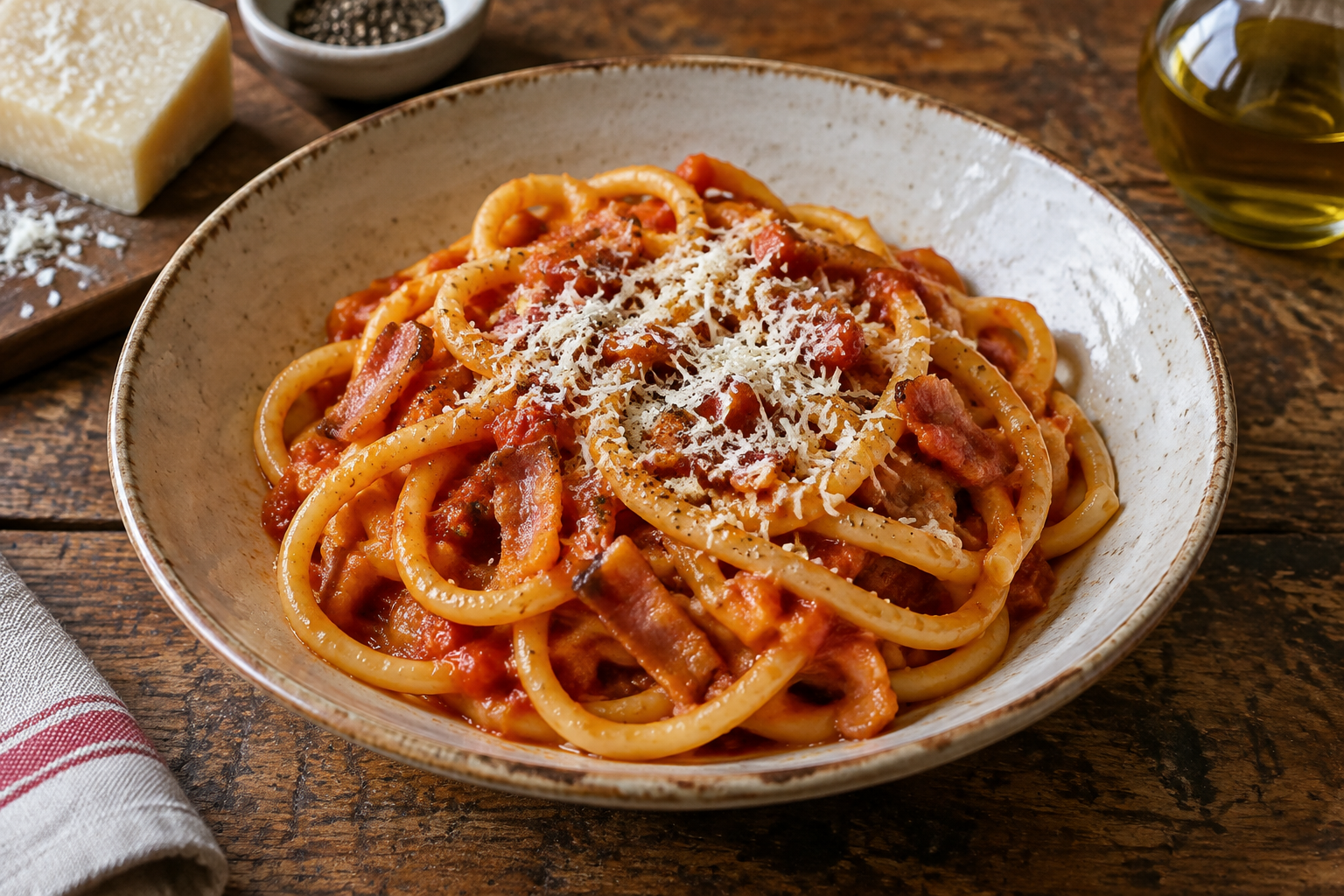
Bucatini with Pancetta & Tomato
Bucatini with pancetta and tomato brings the bold, savoury flavours of Lazio to your table, finished with Pecorino Romano. This home-style variation uses pancetta tesa rather than the guanciale of traditional amatriciana.
Total time
30 minutes
Serves
2 people
Difficulty
Easy
Origin
Lazio
Amatrice, in today’s Lazio, gives its name to amatriciana: pasta dressed with guanciale, tomato and pecorino. Bucatini is especially associated with the dish’s Roman tradition, its thick, hollow strands standing up beautifully to the rich sauce.
This pancetta version follows the same restrained approach: gently render the pork, warm the tomato in its fat and finish the pasta in the pan. It is a practical home-style variation, not the traditional Amatrice recipe.
Ingredients
Method
- 1
1. Prepare the ingredients
Bring 2 litres of water to the boil. Cut the pancetta into strips and finely grate the pecorino. Keep 10 g of the cheese aside for serving.
- 2
2. Render the pancetta
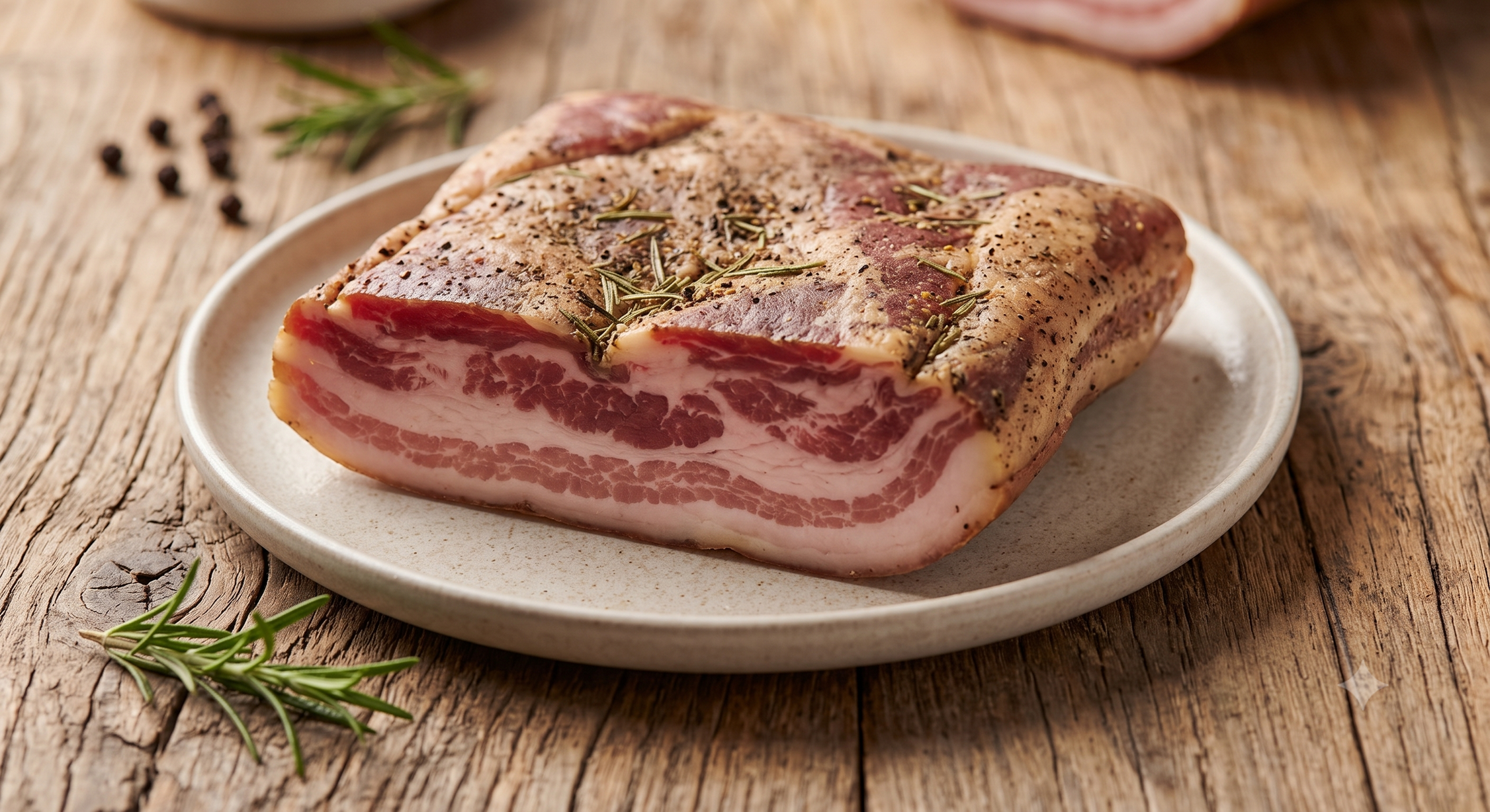
Put the pancetta in a cold, wide frying pan without oil. Set over medium-low heat and cook for 6–8 minutes, stirring occasionally, until the fat turns translucent and the edges are lightly golden. Keep the meat supple rather than crisping it hard.
- 3
3. Warm the tomato sauce
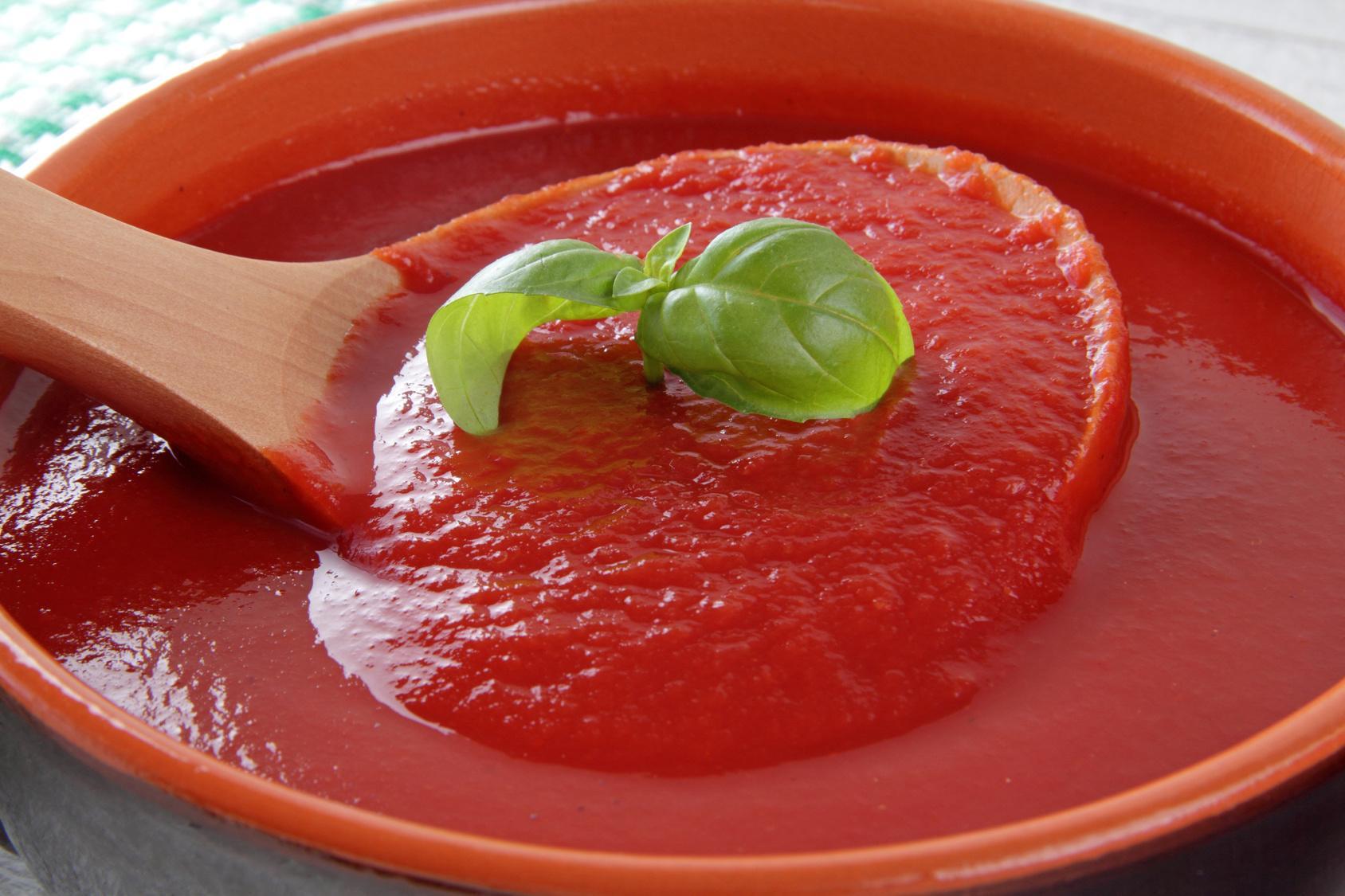
Lower the heat and carefully stir the tomato sauce into the pancetta and its rendered fat. Add the black pepper and simmer gently for 6–8 minutes, stirring occasionally. If it becomes too thick, loosen it with 30 ml of water from the pasta pot.
- 4
4. Cook the bucatini
While the sauce simmers, add the salt and bucatini to the boiling water. Stir to separate the strands and cook until 2 minutes short of the packet’s stated cooking time. Reserve 200 ml of pasta water before draining.
- 5
5. Finish the pasta in the sauce
Transfer the drained bucatini to the frying pan with 60 ml of reserved pasta water. Toss over medium heat for 1–2 minutes, until the pasta is al dente and the sauce clings to the strands. Add more reserved water in 15 ml increments only if needed.
- 6
6. Add pecorino off the heat
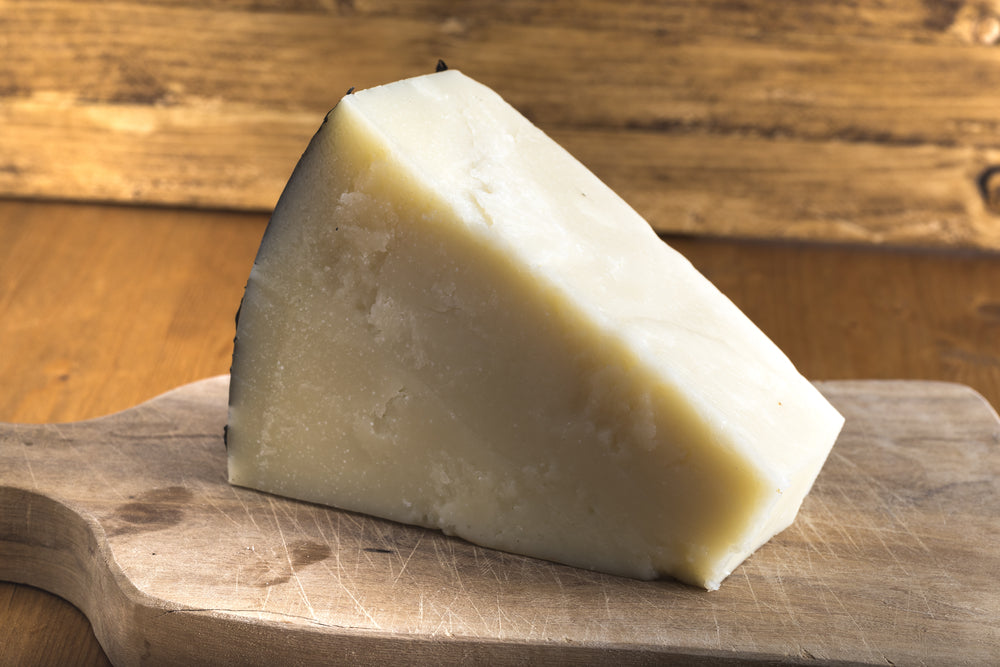
Remove the pan from the heat and let it stand for 30 seconds. Sprinkle in 20 g of pecorino gradually while tossing, adding a little reserved water if the sauce tightens. Divide between two warm bowls and finish with the remaining 10 g of pecorino. Serve immediately.
Chef's secret
Start the pancetta in a cold pan so its fat renders gradually. That fat becomes part of the sauce: tossing it with tomato and starchy pasta water gives the bucatini a glossy coating without butter or cream.
Did you know?
Bucatini takes its name from “buco”, meaning “hole” in Italian. Its hollow centre distinguishes it from spaghetti, while its thicker walls give it a particularly satisfying bite.
Common mistakes
- Calling the pancetta version traditional amatriciana: the defining cured pork in the Amatrice recipe is guanciale.
- Frying the pancetta over high heat until dry and hard instead of rendering it gently.
- Adding pecorino over direct heat, which can make it clump rather than blend into the sauce.
Storage & reheating
Refrigerate leftovers in a shallow, airtight container within 2 hours and eat within 2 days. Reheat gently in a frying pan with 30–45 ml water per portion, tossing until steaming hot throughout. Reheat only once; the pasta will be softer than when freshly cooked.
Shop the recipe
Delivered across Hong Kong by SF Express or Lalamove.
FAQ
Is this traditional amatriciana?
No. It is a Lazio-inspired pancetta-and-tomato variation. Traditional amatriciana uses guanciale; pancetta comes from the belly rather than the cheek and gives a different balance of meat and fat.
Can I use another pasta shape?
Yes. Use 200 g of dried spaghetti or rigatoni and adjust the boiling time to the packet instructions, still finishing the final 1–2 minutes in the sauce.
Can I order the featured ingredients in Hong Kong?
The Italian Club Hong Kong offers Pancetta Tesa, Home Made Tomato Sauce and Pecorino Romano DOP for delivery across Hong Kong via SF Express and Lalamove. Source the bucatini separately.