
The Italian Club
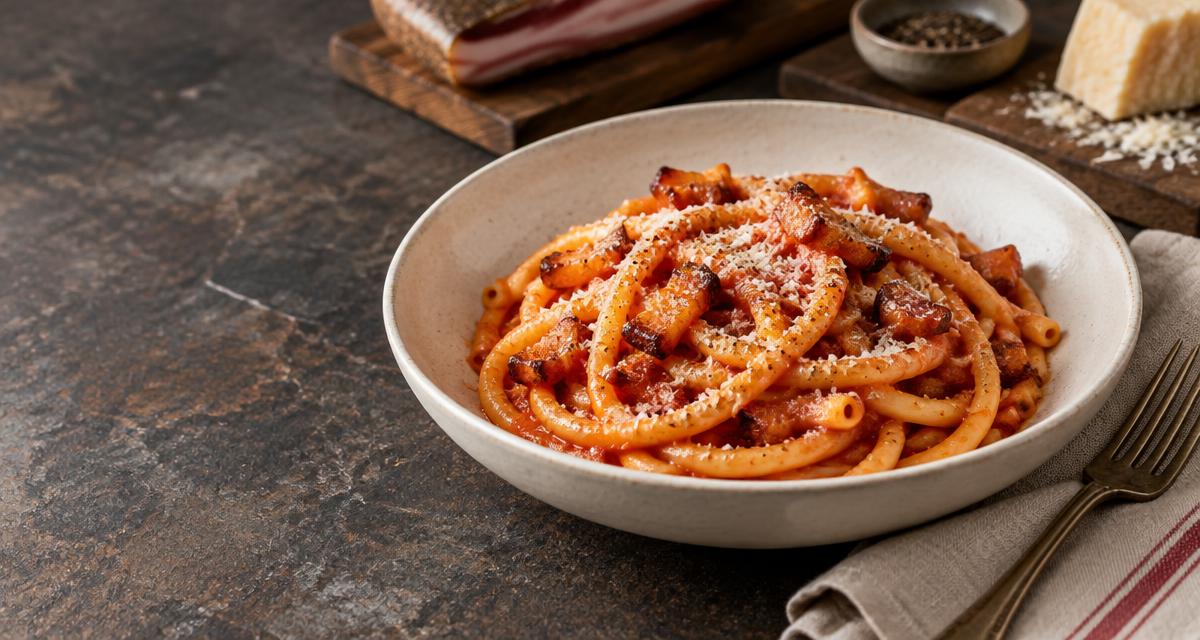
    Bucatini all’Amatriciana with crisp guanciale and Pecorino Romano
    Daily Italian RecipeRecipe 01

    Bucatini all’Amatriciana

    A true Lazio classic: crisp guanciale, tomato and Pecorino Romano wrapped around thick bucatini. No garlic, no onion, no cream.

    Total time

    35 minutes

    Serves

    4 people

    Difficulty

    Easy

    Origin

    Amatrice, Lazio

    Method

    1. 1

      Prepare the guanciale

      Cut the guanciale into batons about 1cm thick. Put them in a cold, wide pan, then set it over medium-low heat. Cook for 8–10 minutes, turning occasionally, until the fat is translucent and the edges are crisp. Do not add oil.

    2. 2

      Build the tomato sauce

      Lift the crisp guanciale from the pan and reserve it. Leave about 3 tablespoons of rendered fat in the pan. Crush the peeled tomatoes by hand, add them with the peperoncino, and simmer gently for 10–12 minutes.

    3. 3

      Cook the bucatini

      Bring a large pot of water to the boil and salt it lightly—the guanciale and Pecorino are already salty. Cook the bucatini until 2 minutes short of al dente. Reserve at least 250ml of pasta water before draining.

    4. 4

      Finish in the pan

      Transfer the bucatini directly into the tomato sauce. Add a splash of pasta water and toss over medium heat for 1–2 minutes, until the sauce clings to every strand. Fold in most of the guanciale.

    5. 5

      Add the Pecorino

      Take the pan off the heat. Wait 20 seconds, then toss with half the Pecorino and another spoonful of pasta water if needed. This keeps the cheese creamy rather than clumpy.

    6. 6

      Serve immediately

      Divide between warm bowls. Finish with the remaining guanciale and Pecorino. The sauce should be glossy and savoury, never heavy or watery.
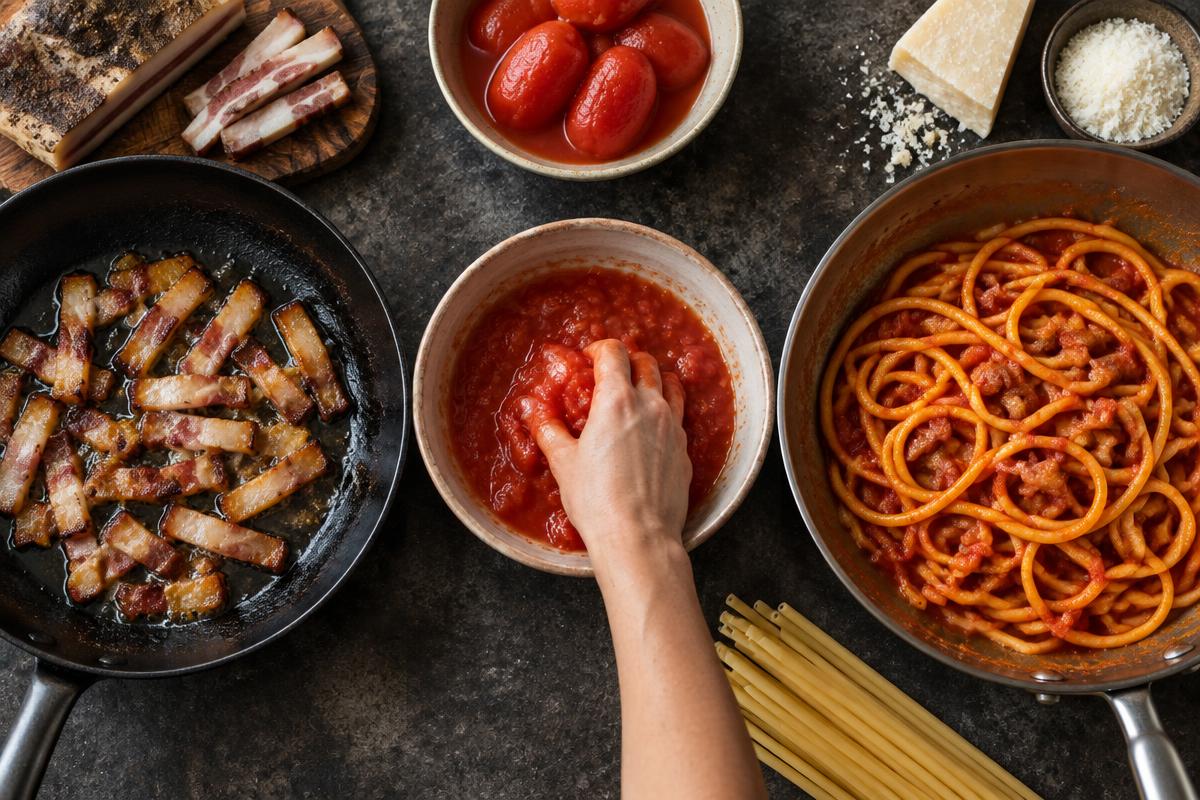
    Guanciale rendering, tomatoes being crushed and bucatini tossed in Amatriciana sauce

    Render the guanciale slowly, crush the tomatoes by hand, then finish the bucatini directly in the sauce.

    Three mistakes to avoid

    • Starting with a hot pan. A cold pan lets the guanciale fat render before the outside burns.
    • Salting as usual. Use less salt in the pasta water because guanciale and Pecorino are naturally savoury.
    • Adding cheese over high heat. Remove the pan from the heat first to prevent the Pecorino from clumping.

    Store and reheat

    Amatriciana is best eaten immediately. Refrigerate leftovers in a sealed container for up to 2 days. Reheat gently in a pan with one or two tablespoons of water, tossing until glossy. Do not freeze the finished pasta; the bucatini will lose its texture.

    You can prepare the sauce one day ahead, refrigerate it, and cook fresh bucatini when ready to serve.